Agriculture
What is NPK & DAP in Agriculture? Meaning, Full Form & Uses
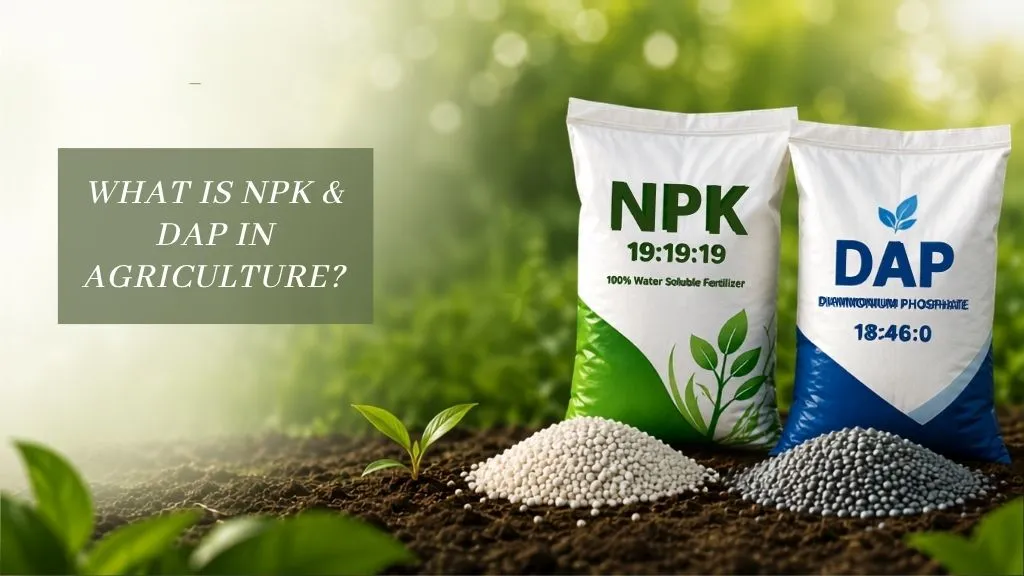
Ever walked into an agro-store, looked at a bag stamped "18-46-0" or "19-19-19," and felt confused?
You aren't alone! While both nourish your crops, DAP (Diammonium Phosphate) is a specialized "starter" fertilizer packed with heavy phosphorus to jumpstart root growth during sowing. On the other hand, NPK (Nitrogen, Phosphorus, Potassium) is a complete, all-rounder plant food designed to support your crops through their entire lifecycle, from lush green leaves to heavy blooming and fruiting.
Let's cut through the confusing chemistry jargon for a second.
If you’ve ever stood in your field or home garden wondering why your crops aren't hitting their peak yield, it usually comes down to nutrient timing. Feed the wrong nutrient at the wrong time, and you're essentially throwing money into the dirt.
At Swasya, where we focus on sustainable soil management, natural estate practices, and intelligent crop nutrition, we get asked this question constantly: "Should I throw DAP on my plants, or do I need NPK?"
To answer that, you first need to know what these short forms actually mean, what’s inside the bag, and when your soil is begging for one over the other.
What Do These Abbreviations Actually Mean?
Before dumping anything onto your topsoil, let's decode the bags.
What is the Full Form of NPK in Agriculture?
If you've ever asked what is the full form of npk, it stands for Nitrogen (N), Phosphorus (P), and Potassium (K).
In the world of npk agriculture, these three are the holy trinity of plant macronutrients:
Nitrogen (N): Drives leafy green vegetation and stem growth.
Phosphorus (P): Builds deep, powerful root networks and triggers early flowering.
Potassium (K): Strengthens general immunity against diseases and boosts fruit size and flavor.
Fun Fact: Ever wonder why Potassium is represented by 'K' in npk full form in agriculture? It comes from Kalium, the Neo-Latin word for the element derived from the Arabic word al-qalyah (plant ashes)!
What is the Full Form of DAP in Agriculture?
The dap full form in agriculture stands for Diammonium Phosphate.
When asking what is dap fertilizer, think of it as a concentrated energy shot specifically formulated for young seeds. It contains 18% Nitrogen and 46% Phosphorus (written as an 18-46-0 ratio). Notice something missing? It has zero Potassium!
DAP vs. NPK Fertilizer: Know the Differences
Mixing up dap and npk fertilizer is one of the most common mistakes beginners make. Here’s a quick breakdown showing the key difference between dap and npk fertilizer:
Key Metric | DAP Fertilizer | NPK Fertilizer |
Nutrient Ratio | Fixed at 18-46-0 | Variable (e.g., 10-10-10, 19-19-19, 12-32-16) |
Nitrogen (N) | 18% | Varies depending on blend |
Phosphorus (P) | High (46%) | Varies depending on blend |
Potassium (K) | 0% (None) | Included (Varies) |
Best Growth Stage | Sowing & early root establishment | Full lifecycle (Vegetative to Fruiting) |
Soil pH Impact | Temporarily raises pH around the seed | Generally neutral |
Ideal Crop Types | Wheat, maize, rice, pulses (at planting) | Vegetables, fruit orchards, flowering plants |
When to Use DAP and NPK Fertilizer?
Using the right product at the wrong stage is like trying to eat dessert before your main meal. Timing is everything!
1. For Flowering Plants & Fruit Trees ➔ Go With NPK
Flowering and fruiting demand a steady dose of Potassium to develop sweet, vibrant, and heavy yields. Since DAP has zero Potassium, relying on it during the blooming stage will leave your plants underperforming. Switch to a high-potassium NPK blend (like 12-32-16 or 19-19-19).
2. For Seed Germination & Root Building ➔ Go With DAP
When you're sowing cereal crops like wheat, rice, or maize, young seedlings need an immediate hit of phosphorus to anchor their roots deep into the ground. DAP acts as the ultimate seed starter.
3. For Your Home Vegetable Garden ➔ Use Both (In Stages!)
A smart approach for vegetable patches:
At planting time: Work a small amount of DAP into the soil to establish strong roots.
During growth & flowering: Transition to a balanced NPK or organic compost tea to support leaf canopy and vegetable development.
Also read: How To Use Perlite For Plants? What is the Best Way to Use?
Advantages of DAP Over NPK Fertilizer
While NPK offers a complete diet, DAP holds a few distinct tactical advantages:
Unbeatable Root Power: With 46% concentrated phosphorus, nothing kickstarts early root networks quite like DAP.
Cost-Effective for Large Grain Farms: For vast cereal crops like paddy or wheat, applying DAP upfront during tilling is often cheaper than applying multi-nutrient NPK blends.
Easy Absorption: The ammonium nitrogen in DAP works synergistically with phosphorus, making it easier for young plant roots to suck up nutrients fast.
Also read: Top 10+ Pesticides Companies in India
The Organic & Soil-First Perspective
Chemical fertilizers like DAP and NPK can deliver quick visual results, but overusing high-salinity synthetic granules without adding organic matter can compact your soil over time and kill off beneficial soil microbes.
At Swasya, we believe in feeding the soil, not just pushing the plant. Whether you use DAP as a seed starter or NPK for your fruit trees, always pair synthetic feeds with rich organic compost, vermicompost, or well-rotted manure. Healthy, living soil retains nutrients longer, buffers against chemical burn, and keeps your farmlands fertile for decades to come.
So, take a look at your crops today: are they trying to set roots, or are they getting ready to bloom? Pick your fertilizer based on what your plants are actually asking for!
Also read: 10 Health Benefits of Organic Food: Why Choose Organic for a Healthier Lifestyle?
FAQs
1: What is the main difference between DAP and NPK fertilizer?
DAP (18-46-0) contains only Nitrogen and high Phosphorus with zero Potassium, making it an early-stage root starter. NPK contains all three essential macronutrients (Nitrogen, Phosphorus, and Potassium) to feed plants throughout their entire lifespan.
2: Can I replace NPK with DAP in my vegetable garden?
You can use DAP during the initial planting phase to develop roots, but you cannot completely replace NPK with DAP because plants need Potassium (K) to produce healthy flowers, fruits, and disease resistance.
3: Is DAP fertilizer safe for all plants?
Yes, but because DAP is highly concentrated and temporarily raises soil alkalinity around the root zone, it should be placed near the seed during planting—never directly touching delicate roots in concentrated heaps.
4: What is the best NPK ratio for flowering and fruit production?
Ratios higher in Phosphorus and Potassium—such as 12-32-16 or 10-26-26—are ideal for flowering and fruiting because Potassium directly drives fruit size, color, and sugar content.
5: Why does DAP have zero Potassium?
DAP is chemically synthesized specifically as an ammonium phosphate source to target early-stage root and vegetation growth, leaving Potassium to be supplemented later based on crop-specific needs.
Ever walked into an agro-store, looked at a bag stamped "18-46-0" or "19-19-19," and felt confused?
You aren't alone! While both nourish your crops, DAP (Diammonium Phosphate) is a specialized "starter" fertilizer packed with heavy phosphorus to jumpstart root growth during sowing. On the other hand, NPK (Nitrogen, Phosphorus, Potassium) is a complete, all-rounder plant food designed to support your crops through their entire lifecycle, from lush green leaves to heavy blooming and fruiting.
Let's cut through the confusing chemistry jargon for a second.
If you’ve ever stood in your field or home garden wondering why your crops aren't hitting their peak yield, it usually comes down to nutrient timing. Feed the wrong nutrient at the wrong time, and you're essentially throwing money into the dirt.
At Swasya, where we focus on sustainable soil management, natural estate practices, and intelligent crop nutrition, we get asked this question constantly: "Should I throw DAP on my plants, or do I need NPK?"
To answer that, you first need to know what these short forms actually mean, what’s inside the bag, and when your soil is begging for one over the other.
What Do These Abbreviations Actually Mean?
Before dumping anything onto your topsoil, let's decode the bags.
What is the Full Form of NPK in Agriculture?
If you've ever asked what is the full form of npk, it stands for Nitrogen (N), Phosphorus (P), and Potassium (K).
In the world of npk agriculture, these three are the holy trinity of plant macronutrients:
Nitrogen (N): Drives leafy green vegetation and stem growth.
Phosphorus (P): Builds deep, powerful root networks and triggers early flowering.
Potassium (K): Strengthens general immunity against diseases and boosts fruit size and flavor.
Fun Fact: Ever wonder why Potassium is represented by 'K' in npk full form in agriculture? It comes from Kalium, the Neo-Latin word for the element derived from the Arabic word al-qalyah (plant ashes)!
What is the Full Form of DAP in Agriculture?
The dap full form in agriculture stands for Diammonium Phosphate.
When asking what is dap fertilizer, think of it as a concentrated energy shot specifically formulated for young seeds. It contains 18% Nitrogen and 46% Phosphorus (written as an 18-46-0 ratio). Notice something missing? It has zero Potassium!
DAP vs. NPK Fertilizer: Know the Differences
Mixing up dap and npk fertilizer is one of the most common mistakes beginners make. Here’s a quick breakdown showing the key difference between dap and npk fertilizer:
Key Metric | DAP Fertilizer | NPK Fertilizer |
Nutrient Ratio | Fixed at 18-46-0 | Variable (e.g., 10-10-10, 19-19-19, 12-32-16) |
Nitrogen (N) | 18% | Varies depending on blend |
Phosphorus (P) | High (46%) | Varies depending on blend |
Potassium (K) | 0% (None) | Included (Varies) |
Best Growth Stage | Sowing & early root establishment | Full lifecycle (Vegetative to Fruiting) |
Soil pH Impact | Temporarily raises pH around the seed | Generally neutral |
Ideal Crop Types | Wheat, maize, rice, pulses (at planting) | Vegetables, fruit orchards, flowering plants |
When to Use DAP and NPK Fertilizer?
Using the right product at the wrong stage is like trying to eat dessert before your main meal. Timing is everything!
1. For Flowering Plants & Fruit Trees ➔ Go With NPK
Flowering and fruiting demand a steady dose of Potassium to develop sweet, vibrant, and heavy yields. Since DAP has zero Potassium, relying on it during the blooming stage will leave your plants underperforming. Switch to a high-potassium NPK blend (like 12-32-16 or 19-19-19).
2. For Seed Germination & Root Building ➔ Go With DAP
When you're sowing cereal crops like wheat, rice, or maize, young seedlings need an immediate hit of phosphorus to anchor their roots deep into the ground. DAP acts as the ultimate seed starter.
3. For Your Home Vegetable Garden ➔ Use Both (In Stages!)
A smart approach for vegetable patches:
At planting time: Work a small amount of DAP into the soil to establish strong roots.
During growth & flowering: Transition to a balanced NPK or organic compost tea to support leaf canopy and vegetable development.
Also read: How To Use Perlite For Plants? What is the Best Way to Use?
Advantages of DAP Over NPK Fertilizer
While NPK offers a complete diet, DAP holds a few distinct tactical advantages:
Unbeatable Root Power: With 46% concentrated phosphorus, nothing kickstarts early root networks quite like DAP.
Cost-Effective for Large Grain Farms: For vast cereal crops like paddy or wheat, applying DAP upfront during tilling is often cheaper than applying multi-nutrient NPK blends.
Easy Absorption: The ammonium nitrogen in DAP works synergistically with phosphorus, making it easier for young plant roots to suck up nutrients fast.
Also read: Top 10+ Pesticides Companies in India
The Organic & Soil-First Perspective
Chemical fertilizers like DAP and NPK can deliver quick visual results, but overusing high-salinity synthetic granules without adding organic matter can compact your soil over time and kill off beneficial soil microbes.
At Swasya, we believe in feeding the soil, not just pushing the plant. Whether you use DAP as a seed starter or NPK for your fruit trees, always pair synthetic feeds with rich organic compost, vermicompost, or well-rotted manure. Healthy, living soil retains nutrients longer, buffers against chemical burn, and keeps your farmlands fertile for decades to come.
So, take a look at your crops today: are they trying to set roots, or are they getting ready to bloom? Pick your fertilizer based on what your plants are actually asking for!
Also read: 10 Health Benefits of Organic Food: Why Choose Organic for a Healthier Lifestyle?
FAQs
1: What is the main difference between DAP and NPK fertilizer?
DAP (18-46-0) contains only Nitrogen and high Phosphorus with zero Potassium, making it an early-stage root starter. NPK contains all three essential macronutrients (Nitrogen, Phosphorus, and Potassium) to feed plants throughout their entire lifespan.
2: Can I replace NPK with DAP in my vegetable garden?
You can use DAP during the initial planting phase to develop roots, but you cannot completely replace NPK with DAP because plants need Potassium (K) to produce healthy flowers, fruits, and disease resistance.
3: Is DAP fertilizer safe for all plants?
Yes, but because DAP is highly concentrated and temporarily raises soil alkalinity around the root zone, it should be placed near the seed during planting—never directly touching delicate roots in concentrated heaps.
4: What is the best NPK ratio for flowering and fruit production?
Ratios higher in Phosphorus and Potassium—such as 12-32-16 or 10-26-26—are ideal for flowering and fruiting because Potassium directly drives fruit size, color, and sugar content.
5: Why does DAP have zero Potassium?
DAP is chemically synthesized specifically as an ammonium phosphate source to target early-stage root and vegetation growth, leaving Potassium to be supplemented later based on crop-specific needs.
Akshata
You Might Also Like


Subscribe to the Swasya
newsletter
Discover insights about sustainable farming, investment opportunities, and the future of agriculture.
By subscribing, you agree to the Privacy Policy
Subscribe to the Swasya
newsletter
Discover insights about sustainable farming, investment opportunities, and the future of agriculture.
By subscribing, you agree to the Privacy Policy