Investment
10 Things to Check Before Investing in a Farm Plot Near Bangalore
28 Sept 2026
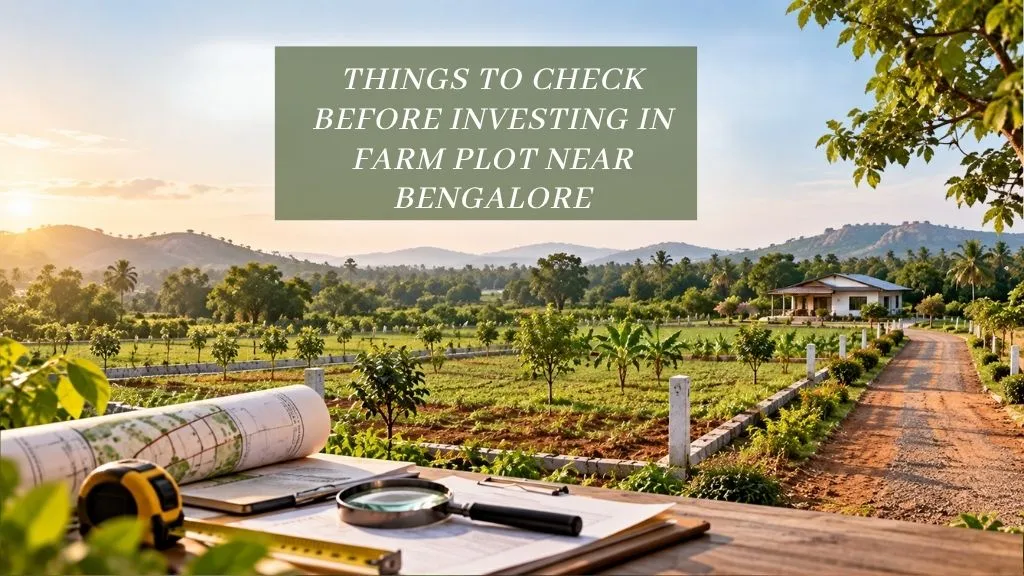
Owning a farm plot near Bangalore can offer a combination of land ownership, access to green surroundings and the opportunity to participate in agricultural activities. But buying farmland involves more than comparing plot sizes and prices.
Before making a farm plot investment near Bangalore, it is important to understand the land's legal status, water availability, soil quality, accessibility, management arrangements and ongoing ownership costs.
Are there any legal issues with the land?
Is the water supply adequate throughout the year?
What will the upkeep costs be?
Who will take care of the farm when you’re away?
What kind of farmland expenses will you have after buying?
Is the location actually suitable for your investment goals?
These questions matter because buying the land is only the beginning. You also need to understand the farmland maintenance cost, management arrangements and other expenses that come with owning a farm plot.
Before making a monetary investment, take some time to look beyond the brochure, the greenery and the price per square foot. A little research upfront can help you understand what you’re actually getting into.
10 Key Factors to Check Before Investing in a Farm Plot
So, before you go ahead with a farm plot investment near Bangalore, here are 10 important things you should check.
Verify the Land Documents and Legal Status
First, the less exciting side of buying farmland; the paperwork.
It may not be the most entertaining step, but you shouldn’t skip it. When considering a farm plot investment near Bangalore, make sure the title is clear and all the paperwork is in order.
Be sure to check the following:
Sale deeds and deeds of prior title.
Encumbrance Certificate
Revenue records
Survey numbers
Land boundaries
Access and right of way are also important and should be verified properly. Any existing disputes or claims should be identified and legally resolved before you proceed.
Here is an important reminder- don’t take a word for granted. Have the documents checked by a qualified property lawyer.
Check the Water Source and Year-Round Availability
A farm without reliable water sources?
That’s an issue.
Trees require water. Crops require water. Even keeping a vibrant landscape needs water.
So if you want to buy a plot for your farm, don’t just ask the question, “Is there a borewell?”
Ask a few additional questions:
What volume of water is available?
Does it have any seasonal restrictions?
What occurs in the summer?
Does the area have a rain water harvesting system?
What is the distribution of water on the farm?
These details are crucial.
While May and June may have green grass and a watercolor sky, it is the water that is important, not the grass and sky.
Water for agricultural land is more than just a luxury.
It’s one of the necessities!
Get the Soil Tested
This information may not be readily taken in when you are excited about buying a farm.
‘The soil.’
You may have a great site, excellent access and lots of greenery, but if the soil isn’t conducive to the crops or trees you want to grow, you will have to face that challenge.
Therefore, make sure the soil has been tested.
The soil properties, such as soil type, soil reaction (pH level), drainage, nutrient and organic matter levels can give valuable information regarding the land.
Also, do not take it for granted that all of the crops will grow in the same manner.
The selection of the crops or trees to be planted should depend on the nature of the land, climate, water supply and farming practices. In other words, before you determine what to plant, know what the ground will yield and consider how your choices may affect your farmland expenses over time.
Understand What Managed Farmland Actually Includes
This can be a bit perplexing.
Managed farmland means that you may think that someone will take care of all this.
But what does everything mean?
Does the management team include someone who is responsible for irrigation?
When you’re not there, who is running the farm?
Are there any costs associated with security and maintenance of common areas not included in the management fee?
These are key questions to ask before you buy a land.
However, if you don’t have the time to visit and maintain your land regularly, a managed farm may be a good option. But don’t just pay attention to the word “managed.”
It’s crucial to understand what the management actually includes and how it affects your managed farmland cost and farmland maintenance cost.
Ask for a comprehensive list of what is covered, what isn’t, and what may cost extra.
Understand the Ongoing Farm Maintenance Cost
Many buyers tend to focus solely on the price when they are looking for a property to buy.
Now suppose you find a farm place which fits your budget just right.
What happens after the sale, though?
There could be continued farmland expenses such as irrigation, labour, plant maintenance, fertiliser, pest control, security and infrastructure maintenance. Understanding the farmland maintenance cost beforehand can help you plan your budget better.
Therefore, it is important to understand all upkeep expenses for the farmland prior to making a commitment to farm investment.
Consider asking:
How much does a yearly maintenance charge cost?
Is it a level charge or will it rise?
Does “agricultural input“ count?
Does the irrigation and labour cover?
Do you have to pay extra to collect the harvest or specific maintenance costs?
Think like this.
There is one cost for buying the farm. The costs of ownership and maintenance are a second type.
It’s essential to comprehend both.
Calculate the Total Cost of Owning the Farm Plot
When considering farmland, maintenance isn’t the only cost to keep in mind.
There are various other expenses that can arise both at the time of purchase and throughout your ownership.
Your initial costs might include:
Purchase price
Registration and stamp duty
Legal verification
Documentation fees
Development or infrastructure charges
Additionally, there are ongoing costs such as:
Farm management
Irrigation
Labor
Plantation upkeep
Security
Repairs
Maintenance of common areas
Depending on your plans for the farm, you may also face extra farmland expenses in the future.
This is why it’s important to avoid comparing properties solely based on their listed price. A less expensive farm doesn’t automatically mean it’s cheaper to maintain.
When comparing options, consider the managed farmland cost, ongoing farmland maintenance cost and overall expenses rather than just the initial price.
Compare the Managed Farmland Cost With the Services Provided
Here’s another question that’s definitely worth considering:
“What am I really getting for the amount I’m spending?”
When you’re evaluating managed farms, don’t just focus on the cost of the managed farmland.
Take into account everything that comes along with it.
Does the property already feature a plantation?
Are there developed internal roads?
Is there a proper irrigation system in place?
Is the farm enclosed with fencing?
Is there security available?
Who takes care of the daily agricultural operations?
Is there a dedicated team on-site?
Two properties might have similar plot sizes but vastly different levels of infrastructure and management.
So, rather than simply asking, “Which one is cheaper?”, consider asking:
“Which one offers me better value for my investment?”
That’s a far more insightful comparison.
Evaluate Location and Accessibility From Bangalore
Have you ever visited a property and thought, “This place is stunning?”
That’s wonderful.
However, don’t base your decision solely on the interior of the property.
Take a look around.
How accessible is the farm from Bangalore?
What condition are the roads in?
How far is it from major highways?
Are there nearby towns and essential services?
Is the surrounding area on the rise?
These factors can significantly impact your experience as an owner and the property’s future value.
If you’re particularly interested in investing in a farm plot close to Bangalore, accessibility becomes even more crucial.
After all, what’s the point of having a weekend farm if reaching it turns every weekend into a road trip you dread?
Research the Developer or Seller
When you invest in land, it’s more than just a piece of property.
If it’s a managed farmland project, you’re also placing your trust in someone to care for that land.
Therefore, take a moment to learn about the seller.
How long have they been in business?
What other projects have they successfully completed?
Is it possible for you to visit one of their current farms?
How well are those farms being looked after?
Can you talk to current owners?
These are straightforward questions, but they can provide valuable insights.
If you can, visit an existing project instead of solely depending on brochures, photos, or promises.
Observe the management in action.
This is often the best way to grasp what you can realistically anticipate after your investment.
Define What You Expect From the Farm Plot Investment
Lastly, let’s discuss expectations.
Farmland should not be viewed as a quick money-making opportunity.
Agriculture comes with its own set of uncertainties. Weather patterns shift. Water supply fluctuates. Crop prices vary. Farmland maintenance cost can change. Even the demand for land can be unpredictable.
So, if someone guarantees returns or rapid growth, take a moment to analyze the figures closely.
Instead, consider what you truly desire from the property.
Are you aiming for long-term appreciation of the land?
Do you wish to engage in agricultural activities on the farm?
Are you interested in having an orchard?
Or do you simply want a green retreat to escape the city on weekends?
There doesn’t have to be just one answer.
For many, farmland can offer both investment opportunities and lifestyle benefits.
However, understanding your own goals makes it much simpler to select the right property.
Before You Invest, Ask Yourself These Questions
Still feeling uncertain if you’ve covered all your bases?
Here’s a handy checklist.
Is the land legally clear?
Is there a dependable water supply year-round?
Has the soil been analyzed?
What does farm management entail?
What will the annual maintenance costs for the farmland be?
What additional expenses for the farmland should I anticipate?
Is the cost of managed farmland fair for the services offered?
How accessible is the property from Bangalore?
Does the developer have a solid track record?
And lastly, am I viewing this as a long-term investment?
If you can confidently answer all these questions, you’re already in a much stronger position than someone who just purchased a farm because it seemed appealing on a Sunday morning.
Final Thoughts
Purchasing farmland can be quite thrilling.
There’s a unique joy in owning a piece of land filled with growing trees, cultivated crops, and the opportunity to enjoy the great outdoors.
However, that excitement should not overshadow the importance of thorough research.
Before investing in a farm plot near Bangalore, it’s essential to familiarize yourself with the land, water resources, soil quality, management practices, and, perhaps most crucially, the associated costs.
Remember, the purchase price is just the starting point.
Gaining insight into the farmland maintenance cost, estimating your ongoing farmland expenses, and evaluating the managed farmland cost against the services provided can help you make a more informed choice.
Ultimately, the best investment in farmland isn’t always the least expensive one.
It’s the investment where the land, location, management, costs, and your expectations align harmoniously.
FAQs
1. What should I check before making a farm plot investment near Bangalore?
Check the land documents, water supply, soil quality, accessibility, management services and expected farmland expenses before investing.
2. What is included in the farmland maintenance cost?
It depends on the project. Ask whether irrigation, labour, plantation upkeep, security and common-area maintenance are included in the farmland maintenance cost.
3. What are the common farmland expenses after buying a plot?
Apart from the purchase price, you may have expenses for registration, irrigation, labour, plantation care, security, repairs and regular maintenance.
4. How do I compare managed farmland cost between different projects?
Don’t compare managed farmland cost alone. Check what services, infrastructure, plantation and maintenance support are included in the overall cost.
5. Is a managed farm better for someone living in Bangalore?
A managed farm can be useful if you don’t have time to visit regularly, but always check the management terms, services included and farmland maintenance cost.
Owning a farm plot near Bangalore can offer a combination of land ownership, access to green surroundings and the opportunity to participate in agricultural activities. But buying farmland involves more than comparing plot sizes and prices.
Before making a farm plot investment near Bangalore, it is important to understand the land's legal status, water availability, soil quality, accessibility, management arrangements and ongoing ownership costs.
Are there any legal issues with the land?
Is the water supply adequate throughout the year?
What will the upkeep costs be?
Who will take care of the farm when you’re away?
What kind of farmland expenses will you have after buying?
Is the location actually suitable for your investment goals?
These questions matter because buying the land is only the beginning. You also need to understand the farmland maintenance cost, management arrangements and other expenses that come with owning a farm plot.
Before making a monetary investment, take some time to look beyond the brochure, the greenery and the price per square foot. A little research upfront can help you understand what you’re actually getting into.
10 Key Factors to Check Before Investing in a Farm Plot
So, before you go ahead with a farm plot investment near Bangalore, here are 10 important things you should check.
Verify the Land Documents and Legal Status
First, the less exciting side of buying farmland; the paperwork.
It may not be the most entertaining step, but you shouldn’t skip it. When considering a farm plot investment near Bangalore, make sure the title is clear and all the paperwork is in order.
Be sure to check the following:
Sale deeds and deeds of prior title.
Encumbrance Certificate
Revenue records
Survey numbers
Land boundaries
Access and right of way are also important and should be verified properly. Any existing disputes or claims should be identified and legally resolved before you proceed.
Here is an important reminder- don’t take a word for granted. Have the documents checked by a qualified property lawyer.
Check the Water Source and Year-Round Availability
A farm without reliable water sources?
That’s an issue.
Trees require water. Crops require water. Even keeping a vibrant landscape needs water.
So if you want to buy a plot for your farm, don’t just ask the question, “Is there a borewell?”
Ask a few additional questions:
What volume of water is available?
Does it have any seasonal restrictions?
What occurs in the summer?
Does the area have a rain water harvesting system?
What is the distribution of water on the farm?
These details are crucial.
While May and June may have green grass and a watercolor sky, it is the water that is important, not the grass and sky.
Water for agricultural land is more than just a luxury.
It’s one of the necessities!
Get the Soil Tested
This information may not be readily taken in when you are excited about buying a farm.
‘The soil.’
You may have a great site, excellent access and lots of greenery, but if the soil isn’t conducive to the crops or trees you want to grow, you will have to face that challenge.
Therefore, make sure the soil has been tested.
The soil properties, such as soil type, soil reaction (pH level), drainage, nutrient and organic matter levels can give valuable information regarding the land.
Also, do not take it for granted that all of the crops will grow in the same manner.
The selection of the crops or trees to be planted should depend on the nature of the land, climate, water supply and farming practices. In other words, before you determine what to plant, know what the ground will yield and consider how your choices may affect your farmland expenses over time.
Understand What Managed Farmland Actually Includes
This can be a bit perplexing.
Managed farmland means that you may think that someone will take care of all this.
But what does everything mean?
Does the management team include someone who is responsible for irrigation?
When you’re not there, who is running the farm?
Are there any costs associated with security and maintenance of common areas not included in the management fee?
These are key questions to ask before you buy a land.
However, if you don’t have the time to visit and maintain your land regularly, a managed farm may be a good option. But don’t just pay attention to the word “managed.”
It’s crucial to understand what the management actually includes and how it affects your managed farmland cost and farmland maintenance cost.
Ask for a comprehensive list of what is covered, what isn’t, and what may cost extra.
Understand the Ongoing Farm Maintenance Cost
Many buyers tend to focus solely on the price when they are looking for a property to buy.
Now suppose you find a farm place which fits your budget just right.
What happens after the sale, though?
There could be continued farmland expenses such as irrigation, labour, plant maintenance, fertiliser, pest control, security and infrastructure maintenance. Understanding the farmland maintenance cost beforehand can help you plan your budget better.
Therefore, it is important to understand all upkeep expenses for the farmland prior to making a commitment to farm investment.
Consider asking:
How much does a yearly maintenance charge cost?
Is it a level charge or will it rise?
Does “agricultural input“ count?
Does the irrigation and labour cover?
Do you have to pay extra to collect the harvest or specific maintenance costs?
Think like this.
There is one cost for buying the farm. The costs of ownership and maintenance are a second type.
It’s essential to comprehend both.
Calculate the Total Cost of Owning the Farm Plot
When considering farmland, maintenance isn’t the only cost to keep in mind.
There are various other expenses that can arise both at the time of purchase and throughout your ownership.
Your initial costs might include:
Purchase price
Registration and stamp duty
Legal verification
Documentation fees
Development or infrastructure charges
Additionally, there are ongoing costs such as:
Farm management
Irrigation
Labor
Plantation upkeep
Security
Repairs
Maintenance of common areas
Depending on your plans for the farm, you may also face extra farmland expenses in the future.
This is why it’s important to avoid comparing properties solely based on their listed price. A less expensive farm doesn’t automatically mean it’s cheaper to maintain.
When comparing options, consider the managed farmland cost, ongoing farmland maintenance cost and overall expenses rather than just the initial price.
Compare the Managed Farmland Cost With the Services Provided
Here’s another question that’s definitely worth considering:
“What am I really getting for the amount I’m spending?”
When you’re evaluating managed farms, don’t just focus on the cost of the managed farmland.
Take into account everything that comes along with it.
Does the property already feature a plantation?
Are there developed internal roads?
Is there a proper irrigation system in place?
Is the farm enclosed with fencing?
Is there security available?
Who takes care of the daily agricultural operations?
Is there a dedicated team on-site?
Two properties might have similar plot sizes but vastly different levels of infrastructure and management.
So, rather than simply asking, “Which one is cheaper?”, consider asking:
“Which one offers me better value for my investment?”
That’s a far more insightful comparison.
Evaluate Location and Accessibility From Bangalore
Have you ever visited a property and thought, “This place is stunning?”
That’s wonderful.
However, don’t base your decision solely on the interior of the property.
Take a look around.
How accessible is the farm from Bangalore?
What condition are the roads in?
How far is it from major highways?
Are there nearby towns and essential services?
Is the surrounding area on the rise?
These factors can significantly impact your experience as an owner and the property’s future value.
If you’re particularly interested in investing in a farm plot close to Bangalore, accessibility becomes even more crucial.
After all, what’s the point of having a weekend farm if reaching it turns every weekend into a road trip you dread?
Research the Developer or Seller
When you invest in land, it’s more than just a piece of property.
If it’s a managed farmland project, you’re also placing your trust in someone to care for that land.
Therefore, take a moment to learn about the seller.
How long have they been in business?
What other projects have they successfully completed?
Is it possible for you to visit one of their current farms?
How well are those farms being looked after?
Can you talk to current owners?
These are straightforward questions, but they can provide valuable insights.
If you can, visit an existing project instead of solely depending on brochures, photos, or promises.
Observe the management in action.
This is often the best way to grasp what you can realistically anticipate after your investment.
Define What You Expect From the Farm Plot Investment
Lastly, let’s discuss expectations.
Farmland should not be viewed as a quick money-making opportunity.
Agriculture comes with its own set of uncertainties. Weather patterns shift. Water supply fluctuates. Crop prices vary. Farmland maintenance cost can change. Even the demand for land can be unpredictable.
So, if someone guarantees returns or rapid growth, take a moment to analyze the figures closely.
Instead, consider what you truly desire from the property.
Are you aiming for long-term appreciation of the land?
Do you wish to engage in agricultural activities on the farm?
Are you interested in having an orchard?
Or do you simply want a green retreat to escape the city on weekends?
There doesn’t have to be just one answer.
For many, farmland can offer both investment opportunities and lifestyle benefits.
However, understanding your own goals makes it much simpler to select the right property.
Before You Invest, Ask Yourself These Questions
Still feeling uncertain if you’ve covered all your bases?
Here’s a handy checklist.
Is the land legally clear?
Is there a dependable water supply year-round?
Has the soil been analyzed?
What does farm management entail?
What will the annual maintenance costs for the farmland be?
What additional expenses for the farmland should I anticipate?
Is the cost of managed farmland fair for the services offered?
How accessible is the property from Bangalore?
Does the developer have a solid track record?
And lastly, am I viewing this as a long-term investment?
If you can confidently answer all these questions, you’re already in a much stronger position than someone who just purchased a farm because it seemed appealing on a Sunday morning.
Final Thoughts
Purchasing farmland can be quite thrilling.
There’s a unique joy in owning a piece of land filled with growing trees, cultivated crops, and the opportunity to enjoy the great outdoors.
However, that excitement should not overshadow the importance of thorough research.
Before investing in a farm plot near Bangalore, it’s essential to familiarize yourself with the land, water resources, soil quality, management practices, and, perhaps most crucially, the associated costs.
Remember, the purchase price is just the starting point.
Gaining insight into the farmland maintenance cost, estimating your ongoing farmland expenses, and evaluating the managed farmland cost against the services provided can help you make a more informed choice.
Ultimately, the best investment in farmland isn’t always the least expensive one.
It’s the investment where the land, location, management, costs, and your expectations align harmoniously.
FAQs
1. What should I check before making a farm plot investment near Bangalore?
Check the land documents, water supply, soil quality, accessibility, management services and expected farmland expenses before investing.
2. What is included in the farmland maintenance cost?
It depends on the project. Ask whether irrigation, labour, plantation upkeep, security and common-area maintenance are included in the farmland maintenance cost.
3. What are the common farmland expenses after buying a plot?
Apart from the purchase price, you may have expenses for registration, irrigation, labour, plantation care, security, repairs and regular maintenance.
4. How do I compare managed farmland cost between different projects?
Don’t compare managed farmland cost alone. Check what services, infrastructure, plantation and maintenance support are included in the overall cost.
5. Is a managed farm better for someone living in Bangalore?
A managed farm can be useful if you don’t have time to visit regularly, but always check the management terms, services included and farmland maintenance cost.
Akshata
You Might Also Like

Subscribe to the Swasya
newsletter
Discover insights about sustainable farming, investment opportunities, and the future of agriculture.
By subscribing, you agree to the Privacy Policy
Subscribe to the Swasya
newsletter
Discover insights about sustainable farming, investment opportunities, and the future of agriculture.
By subscribing, you agree to the Privacy Policy