Managed Farmland
10 Questions to Ask Before Buying Managed Farmland | Swasya
15 Sept 2026
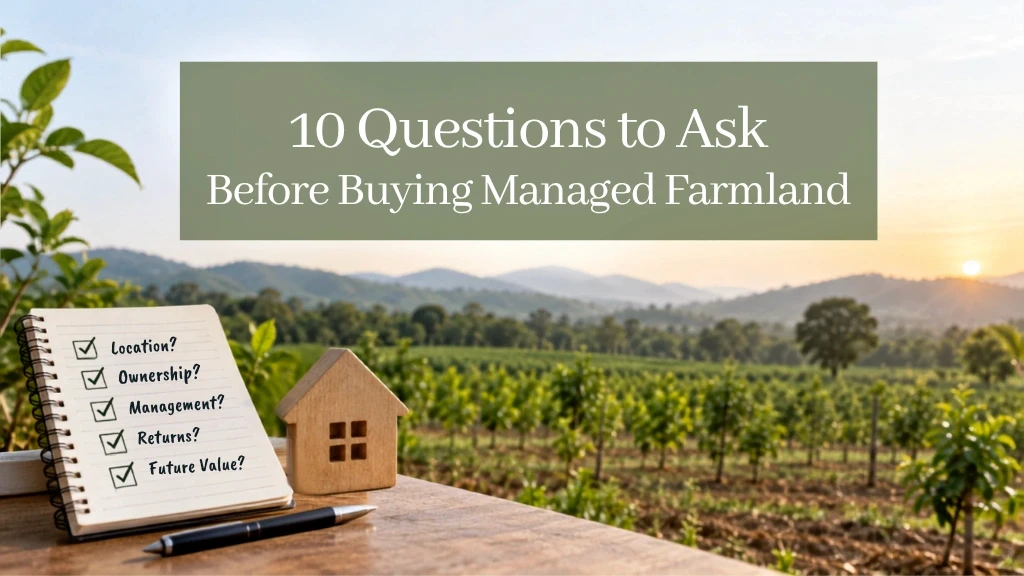
A beautiful farm, a good location, a promising price, these are usually the first things we look at when considering farmland.
But if you're seriously thinking about buying managed farmland, I'd ask a few less exciting questions before getting carried away by the greenery.
Because the things that cause regret later are rarely visible during a site visit.
It's usually something like: “I thought that was included.”
“I didn't know I couldn't do that on my plot.”
Whether you're looking at managed farmland near Bangalore, exploring managed farmland investment, or comparing agricultural land for sale in Karnataka, these are the questions I'd want answered before paying a token.
1. What exactly am I purchasing?
First, get extremely clear about what you're buying.
Ask about the ownership structure, exact plot size, plot identification, boundaries and registration process. Don't rely only on a brochure or a site map. You should understand how your plot is identified on the ground and how that corresponds with the relevant documents.
If you're unsure about the legal or ownership structure, get the documents independently reviewed by a property lawyer.
You should know exactly what you're paying for before you pay for it.
Also read: What Is Managed Farmland? Benefits & How to Choose the Right Project
2. Which documents can I review before paying?
This should never feel like an unreasonable request.
Ask what relevant property, ownership and project documents are available for review before booking or paying a token.
Also ask whether you can have them independently verified.
A good rule for any farmland investment is simple:
If a document affects your ownership, money or rights, read it before committing.
Don't let “our legal team has already checked everything” replace your own due diligence.
3. What exactly does farm management include?
This is the heart of buying managed farmland.
Don't settle for “We manage the farm.” Ask what that means in actual day-to-day operations.
Does it include plantation care? Irrigation? Pruning? Farm upkeep? Security? Common-area maintenance? Seasonal agricultural activities?
And equally important:
What isn't included?
4. What is the water plan during summer Season?
Don't ask only, “Is there water?”
Ask what happens when the weather gets difficult.
What is the irrigation system? How is water distributed? Is there storage? What happens if availability drops during peak summer? Who monitors the system when owners aren't around?
This is one of those questions where the answer should be practical rather than promotional.
A good water plan should work on paper before you expect it to work on the farm.
5. How are my plot boundaries identified and maintained?
This sounds like a small detail until you're standing on your land six months later wondering where your plot actually begins.
Ask how plots are demarcated, whether the boundaries are physically identifiable and how they are maintained over time.
Also ask whether the demarcation shown during your site visit matches the approved layout and relevant documentation.
For a managed farmland community, boundary clarity isn't just about ownership. It also makes future maintenance, construction and everyday use much easier.
6. What can I actually do on my plot?
This is where buyers should get very specific.
Can you build a cottage? Put up a seating area? Plant additional trees? Fence your plot? Bring pets? Have guests? Make changes to the landscape?
Don't assume the answer is automatically yes just because you own the land.
Every project can have its own community guidelines, development rules and applicable permissions. Ask for them before buying, not after.
A simple “allowed / not allowed / requires approval” list can save you a lot of frustration later.
Also read: Investment in Farmand vs Mutual Funds
7. Who actually does the work, and who checks it?
Having a farm team is one thing. Knowing who is accountable is another.
Ask who handles the work on the ground, who supervises it and how the quality of farm operations is monitored.
What happens if a caretaker leaves? Who notices if irrigation isn't working properly? Who checks plantation health?
You don't need a 20-page organisational chart.
You just need to know who is responsible when something needs attention.
That's particularly important if you're buying managed farmland near Bangalore but don't plan to visit every week.
8. What are my visitation and usage rights?
If you're buying farmland as a weekend escape, this matters just as much as the land itself.
Ask:
Can I visit whenever I want? Can my family come without me? Can I bring guests? Are there restrictions on vehicles, pets, events or common-area usage?
You don't want to discover six months after buying that your idea of a relaxing weekend doesn't fit the community's operating rules.
The right managed farm should make the ownership experience clearer, not more complicated.
9. What will I pay after buying farmland?
The purchase price is not necessarily the whole ownership cost.
Ask about recurring management charges, maintenance fees, optional services, infrastructure-related costs and circumstances where additional charges could apply.
And please, get this in writing.
A clear fee structure separating included, recurring and optional costs is far more useful than hearing “there are no hidden charges.”
You should know the financial commitment before you buy the farmland, not after.
Also read: How Much Does Farmland Cost
10. What happens if I want to sell or transfer my farmland later?
You may be buying your farm for decades. That's perfectly fine.
But knowing the exit process before entering is simply sensible.
Ask whether resale or transfer is permitted, what documentation is required, whether there are applicable fees or restrictions, and how the management arrangement works if ownership changes.
Don't look for someone to promise you an easy resale or guaranteed appreciation.
Look for clarity about the process.
Before You Buy, Ask for the Answers in Writing
A credible managed farmland provider shouldn't be uncomfortable with these questions. In fact, good questions make better buyers, and clearer expectations make happier owners.
Whether you're comparing managed farmland in Kanakapura, looking for managed farms near Bangalore, or evaluating agriculture land for sale in Karnataka, don't make your decision only because the property looks beautiful.
Visit it. Ask questions. Read the documents. Understand the management model.
Then buy the land, not the promise.
A beautiful farm, a good location, a promising price, these are usually the first things we look at when considering farmland.
But if you're seriously thinking about buying managed farmland, I'd ask a few less exciting questions before getting carried away by the greenery.
Because the things that cause regret later are rarely visible during a site visit.
It's usually something like: “I thought that was included.”
“I didn't know I couldn't do that on my plot.”
Whether you're looking at managed farmland near Bangalore, exploring managed farmland investment, or comparing agricultural land for sale in Karnataka, these are the questions I'd want answered before paying a token.
1. What exactly am I purchasing?
First, get extremely clear about what you're buying.
Ask about the ownership structure, exact plot size, plot identification, boundaries and registration process. Don't rely only on a brochure or a site map. You should understand how your plot is identified on the ground and how that corresponds with the relevant documents.
If you're unsure about the legal or ownership structure, get the documents independently reviewed by a property lawyer.
You should know exactly what you're paying for before you pay for it.
Also read: What Is Managed Farmland? Benefits & How to Choose the Right Project
2. Which documents can I review before paying?
This should never feel like an unreasonable request.
Ask what relevant property, ownership and project documents are available for review before booking or paying a token.
Also ask whether you can have them independently verified.
A good rule for any farmland investment is simple:
If a document affects your ownership, money or rights, read it before committing.
Don't let “our legal team has already checked everything” replace your own due diligence.
3. What exactly does farm management include?
This is the heart of buying managed farmland.
Don't settle for “We manage the farm.” Ask what that means in actual day-to-day operations.
Does it include plantation care? Irrigation? Pruning? Farm upkeep? Security? Common-area maintenance? Seasonal agricultural activities?
And equally important:
What isn't included?
4. What is the water plan during summer Season?
Don't ask only, “Is there water?”
Ask what happens when the weather gets difficult.
What is the irrigation system? How is water distributed? Is there storage? What happens if availability drops during peak summer? Who monitors the system when owners aren't around?
This is one of those questions where the answer should be practical rather than promotional.
A good water plan should work on paper before you expect it to work on the farm.
5. How are my plot boundaries identified and maintained?
This sounds like a small detail until you're standing on your land six months later wondering where your plot actually begins.
Ask how plots are demarcated, whether the boundaries are physically identifiable and how they are maintained over time.
Also ask whether the demarcation shown during your site visit matches the approved layout and relevant documentation.
For a managed farmland community, boundary clarity isn't just about ownership. It also makes future maintenance, construction and everyday use much easier.
6. What can I actually do on my plot?
This is where buyers should get very specific.
Can you build a cottage? Put up a seating area? Plant additional trees? Fence your plot? Bring pets? Have guests? Make changes to the landscape?
Don't assume the answer is automatically yes just because you own the land.
Every project can have its own community guidelines, development rules and applicable permissions. Ask for them before buying, not after.
A simple “allowed / not allowed / requires approval” list can save you a lot of frustration later.
Also read: Investment in Farmand vs Mutual Funds
7. Who actually does the work, and who checks it?
Having a farm team is one thing. Knowing who is accountable is another.
Ask who handles the work on the ground, who supervises it and how the quality of farm operations is monitored.
What happens if a caretaker leaves? Who notices if irrigation isn't working properly? Who checks plantation health?
You don't need a 20-page organisational chart.
You just need to know who is responsible when something needs attention.
That's particularly important if you're buying managed farmland near Bangalore but don't plan to visit every week.
8. What are my visitation and usage rights?
If you're buying farmland as a weekend escape, this matters just as much as the land itself.
Ask:
Can I visit whenever I want? Can my family come without me? Can I bring guests? Are there restrictions on vehicles, pets, events or common-area usage?
You don't want to discover six months after buying that your idea of a relaxing weekend doesn't fit the community's operating rules.
The right managed farm should make the ownership experience clearer, not more complicated.
9. What will I pay after buying farmland?
The purchase price is not necessarily the whole ownership cost.
Ask about recurring management charges, maintenance fees, optional services, infrastructure-related costs and circumstances where additional charges could apply.
And please, get this in writing.
A clear fee structure separating included, recurring and optional costs is far more useful than hearing “there are no hidden charges.”
You should know the financial commitment before you buy the farmland, not after.
Also read: How Much Does Farmland Cost
10. What happens if I want to sell or transfer my farmland later?
You may be buying your farm for decades. That's perfectly fine.
But knowing the exit process before entering is simply sensible.
Ask whether resale or transfer is permitted, what documentation is required, whether there are applicable fees or restrictions, and how the management arrangement works if ownership changes.
Don't look for someone to promise you an easy resale or guaranteed appreciation.
Look for clarity about the process.
Before You Buy, Ask for the Answers in Writing
A credible managed farmland provider shouldn't be uncomfortable with these questions. In fact, good questions make better buyers, and clearer expectations make happier owners.
Whether you're comparing managed farmland in Kanakapura, looking for managed farms near Bangalore, or evaluating agriculture land for sale in Karnataka, don't make your decision only because the property looks beautiful.
Visit it. Ask questions. Read the documents. Understand the management model.
Then buy the land, not the promise.
Akshata
You Might Also Like



Subscribe to the Swasya
newsletter
Discover insights about sustainable farming, investment opportunities, and the future of agriculture.
By subscribing, you agree to the Privacy Policy
Subscribe to the Swasya
newsletter
Discover insights about sustainable farming, investment opportunities, and the future of agriculture.
By subscribing, you agree to the Privacy Policy