Farming
Hydroponics vs Aquaponics: Key Differences & Best System
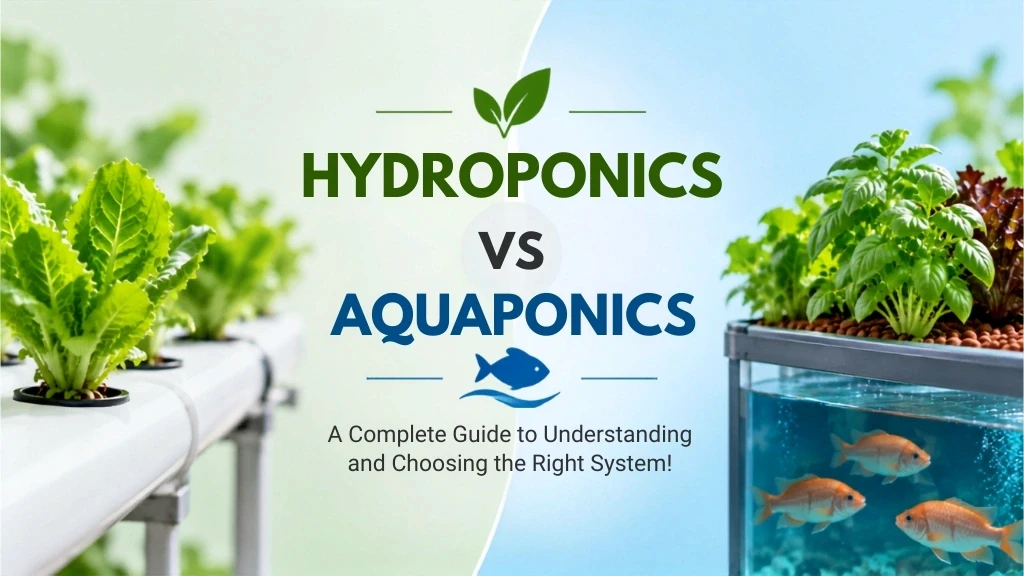
Reading about both systems can actually make the decision harder. Hydroponics sounds simpler, while aquaponics feels more sustainable. So, which one should you choose?
The answer depends on your goals.
If you're a beginner with limited space and want faster setup, hydroponics is usually the easier option. On the other hand, if you're interested in creating a self-sustaining ecosystem that combines fish farming with crop production, aquaponics can be incredibly rewarding.
Neither system is "better" for everyone. The right choice depends on your budget, available space, maintenance preferences, and whether you're growing food as a hobby, a business, or for your family.
Hydroponics vs Aquaponics: Which Is Better for Different Goals?
If your goal is... | Choose |
Faster setup | Hydroponics |
Lower maintenance | Hydroponics |
Organic ecosystem | Aquaponics |
Grow vegetables only | Hydroponics |
Grow fish and vegetables | Aquaponics |
Water conservation | Aquaponics |
Commercial leafy greens | Hydroponics |
Sustainable farming | Aquaponics |
Initial Investment Comparison
Factor | Hydroponics | Aquaponics |
Initial Cost | Medium | High |
Running Cost | Medium | Low |
Maintenance | Low | Medium to High |
Technical Knowledge | Moderate | High |
Time to Learn | Short | Longer |
Aquaponics vs Hydroponics Pros and Cons
Hydroponics
PROS | CONS |
|---|---|
Faster plant growth | Requires electricity |
Easier for beginners | Nutrient solution must be monitored |
Less space needed | Doesn't produce fish |
Better nutrient control |
Aquaponics
PROS | CONS |
|---|---|
Produces fish and vegetables | Higher setup cost |
Highly sustainable | More maintenance |
Less fertilizer required | Fish health affects crops |
Excellent water recycling |
What Crops Grow Best?
Hydroponics:
BEST FOR |
|---|
Lettuce |
Spincach |
Kale |
Basil |
Mint |
Tomatoes |
Aquaponics
BEST FOR | FISH |
|---|---|
Lettuce | Tilapia |
Spinach | Catfish |
Tomatoes | Carp |
Chillies | |
Cucumbers |
Is Aquaponic Farming Profitable?
Aquaponic farming is gaining attention because it produces two valuable outputs from one system, fresh vegetables and fish. While the initial investment is usually higher than hydroponics, many commercial growers see long-term value in its efficient use of water and resources. However, profitability depends on factors like system design, maintenance, local demand, and the choice of fish and crops.
Also read: Top 20 +Profitable Agriculture Business Ideas In India 2026
Common Mistakes Beginners Make
Many first-time growers assume these systems are completely maintenance-free. In reality, both require regular monitoring.
Common mistakes include:
Ignoring water quality
Choosing the wrong crops
Overstocking fish in aquaponics
Poor lighting
Incorrect nutrient balance
Skipping regular maintenance
Can Hydroponics and Aquaponics Be Used Together?
Yes. Some advanced commercial farms combine hydroponic and aquaponic principles to maximise water efficiency and diversify production. However, for beginners, it's usually better to master one system before experimenting with hybrid setups.
How Swasya Looks at Sustainable Farming
At Swasya, we believe sustainable farming isn't about choosing one method over another. Whether it's hydroponics, aquaponics, regenerative agriculture, or organic farming, the real goal is to grow food while protecting natural resources. Different farming methods suit different landscapes, and understanding these innovations helps create healthier farms and more resilient food systems.
Final Thoughts
If you're comparing hydroponics vs aquaponics, remember there isn't a universal winner.
Hydroponics is often the better choice for beginners, commercial vegetable growers, and those looking for quicker setup and easier maintenance.
Aquaponics, on the other hand, creates a more natural ecosystem by combining fish farming with crop production. Although it requires more planning and investment, it offers a sustainable approach to food production that many farmers and hobby growers appreciate.
The best system is ultimately the one that fits your space, budget, experience, and long-term goals.
FAQs
1. What are the pros and cons of aquaponics vs hydroponics?
Hydroponics is simpler to set up and control, while aquaponics can be more sustainable but requires managing both plants and fish.
2. Can you do aquaponics and hydroponics together?
Yes. Both systems can use similar soilless growing methods, and some setups combine hydroponic growing techniques with aquaponic water systems.
3. Is aquaponic farming profitable?
Aquaponic farming can be profitable when the system, crops, fish, operating costs and market demand are well planned.
4. Which uses less water, hydroponics or aquaponics?
Both use much less water than traditional farming, but aquaponics can recycle water between the fish tank and plants.
5. What can you grow in aquaponics and hydroponics?
Both systems can grow leafy greens, herbs and several vegetables. The right crops depend on the setup and growing conditions.
Reading about both systems can actually make the decision harder. Hydroponics sounds simpler, while aquaponics feels more sustainable. So, which one should you choose?
The answer depends on your goals.
If you're a beginner with limited space and want faster setup, hydroponics is usually the easier option. On the other hand, if you're interested in creating a self-sustaining ecosystem that combines fish farming with crop production, aquaponics can be incredibly rewarding.
Neither system is "better" for everyone. The right choice depends on your budget, available space, maintenance preferences, and whether you're growing food as a hobby, a business, or for your family.
Hydroponics vs Aquaponics: Which Is Better for Different Goals?
If your goal is... | Choose |
Faster setup | Hydroponics |
Lower maintenance | Hydroponics |
Organic ecosystem | Aquaponics |
Grow vegetables only | Hydroponics |
Grow fish and vegetables | Aquaponics |
Water conservation | Aquaponics |
Commercial leafy greens | Hydroponics |
Sustainable farming | Aquaponics |
Initial Investment Comparison
Factor | Hydroponics | Aquaponics |
Initial Cost | Medium | High |
Running Cost | Medium | Low |
Maintenance | Low | Medium to High |
Technical Knowledge | Moderate | High |
Time to Learn | Short | Longer |
Aquaponics vs Hydroponics Pros and Cons
Hydroponics
PROS | CONS |
|---|---|
Faster plant growth | Requires electricity |
Easier for beginners | Nutrient solution must be monitored |
Less space needed | Doesn't produce fish |
Better nutrient control |
Aquaponics
PROS | CONS |
|---|---|
Produces fish and vegetables | Higher setup cost |
Highly sustainable | More maintenance |
Less fertilizer required | Fish health affects crops |
Excellent water recycling |
What Crops Grow Best?
Hydroponics:
BEST FOR |
|---|
Lettuce |
Spincach |
Kale |
Basil |
Mint |
Tomatoes |
Aquaponics
BEST FOR | FISH |
|---|---|
Lettuce | Tilapia |
Spinach | Catfish |
Tomatoes | Carp |
Chillies | |
Cucumbers |
Is Aquaponic Farming Profitable?
Aquaponic farming is gaining attention because it produces two valuable outputs from one system, fresh vegetables and fish. While the initial investment is usually higher than hydroponics, many commercial growers see long-term value in its efficient use of water and resources. However, profitability depends on factors like system design, maintenance, local demand, and the choice of fish and crops.
Also read: Top 20 +Profitable Agriculture Business Ideas In India 2026
Common Mistakes Beginners Make
Many first-time growers assume these systems are completely maintenance-free. In reality, both require regular monitoring.
Common mistakes include:
Ignoring water quality
Choosing the wrong crops
Overstocking fish in aquaponics
Poor lighting
Incorrect nutrient balance
Skipping regular maintenance
Can Hydroponics and Aquaponics Be Used Together?
Yes. Some advanced commercial farms combine hydroponic and aquaponic principles to maximise water efficiency and diversify production. However, for beginners, it's usually better to master one system before experimenting with hybrid setups.
How Swasya Looks at Sustainable Farming
At Swasya, we believe sustainable farming isn't about choosing one method over another. Whether it's hydroponics, aquaponics, regenerative agriculture, or organic farming, the real goal is to grow food while protecting natural resources. Different farming methods suit different landscapes, and understanding these innovations helps create healthier farms and more resilient food systems.
Final Thoughts
If you're comparing hydroponics vs aquaponics, remember there isn't a universal winner.
Hydroponics is often the better choice for beginners, commercial vegetable growers, and those looking for quicker setup and easier maintenance.
Aquaponics, on the other hand, creates a more natural ecosystem by combining fish farming with crop production. Although it requires more planning and investment, it offers a sustainable approach to food production that many farmers and hobby growers appreciate.
The best system is ultimately the one that fits your space, budget, experience, and long-term goals.
FAQs
1. What are the pros and cons of aquaponics vs hydroponics?
Hydroponics is simpler to set up and control, while aquaponics can be more sustainable but requires managing both plants and fish.
2. Can you do aquaponics and hydroponics together?
Yes. Both systems can use similar soilless growing methods, and some setups combine hydroponic growing techniques with aquaponic water systems.
3. Is aquaponic farming profitable?
Aquaponic farming can be profitable when the system, crops, fish, operating costs and market demand are well planned.
4. Which uses less water, hydroponics or aquaponics?
Both use much less water than traditional farming, but aquaponics can recycle water between the fish tank and plants.
5. What can you grow in aquaponics and hydroponics?
Both systems can grow leafy greens, herbs and several vegetables. The right crops depend on the setup and growing conditions.
Akshata
You Might Also Like


Subscribe to the Swasya
newsletter
Discover insights about sustainable farming, investment opportunities, and the future of agriculture.
By subscribing, you agree to the Privacy Policy
Subscribe to the Swasya
newsletter
Discover insights about sustainable farming, investment opportunities, and the future of agriculture.
By subscribing, you agree to the Privacy Policy