Farming
How Fuel Price Affect Indian Agriculture, Farmers & Food Prices
19 Aug 2026
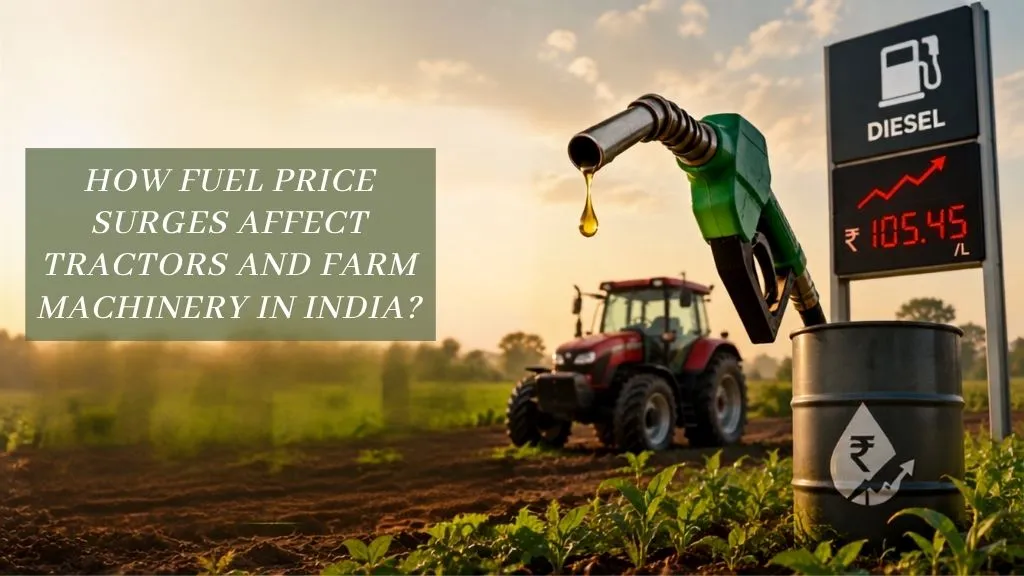
A typical 45 HP tractor can consume around 5–6 liters of diesel every hour during deep tilling, making fuel one of the biggest recurring costs for farmers. In a normal season, preparing just 5 acres of land can easily swallow 150+ liters of fuel before a single seed even hits the soil.
That is why a Fuel Price Surge hits Indian agriculture like a freight train.
When diesel powers tractors, harvesters, and heavy-duty 5 HP irrigation pumps across rural India, any hike in crude oil directly inflates the base cost of growing food. Today, diesel accounts for nearly 45% to 50% of the total operational expenses in mechanized farming. When rising fuel prices push diesel rates up, renting Farm Machinery gets 15% to 20% more expensive overnight, transportation freight to local mandis spikes, and chemical fertilizer manufacturing costs climb right along with it.
In this breakdown, we’ll dig past the complex market jargon to look at how a Fuel Price Surge trickles into farm budgets, why heavy Farm Machinery gets too expensive to operate, and what this all means for your dinner table and the future of Indian agriculture.
How Dependent Is Indian Agriculture on Diesel? Key Facts
To understand the crisis, you have to realize just how deeply petroleum is baked into Indian farming. We aren't in the 1950s anymore, bullocks have largely given way to horsepower, and monsoon reliance is heavily supplemented by pump sets.
Quick Data Snapshot
Diesel Dependency: Agriculture accounts for roughly 13% to 15% of India's total annual diesel consumption.
Running a Tractor: A standard 45–50 HP tractor burns through 4 to 6 liters of diesel per hour while tilling or disc harrowing. Deep ploughing can spike that even higher!
Water Costs: Running a traditional 5 HP diesel pump set to irrigate just one acre of land consumes around 1.2 to 1.5 liters of diesel per hour.
The Ripple Effect: When diesel goes up by just ₹3–5 per liter, an average 5-acre farmer sees their operational expenses jump by thousands of rupees in a single cropping season.
How Rising Diesel Prices Increase Farming Costs
When crude oil prices jump globally, domestic diesel rates climb right along with them. For a farmer preparing their field, this creates an immediate financial bottleneck across two massive daily operations:
Field Preparation & Tilling
Modern field prep heavily relies on mechanization. When diesel powers tractors, rotavators, and harvesters, every single pass across a field costs real money. When diesel prices soar, custom-hiring rates for tractors increase by 15% to 20%. For small and marginal farmers who don't own tractors and must rent them by the hour, this instantly eats away their thin profit margins before seeds even hit the ground.
Water Supply & Pumping
In rainfed or low-canal regions, farmers rely on groundwater. Where electricity grid access is spotty, heavy-duty irrigation pumps driven by diesel run continuously for hours. If a crop needs 5 to 6 watering cycles a season, a Fuel Price Surge turns water from a basic necessity into an expensive luxury.
Also Check: How Much Investment Do You Need to Setup for Solar Farming?
How Fuel and Energy Prices Affect Fertilizer Costs?
It isn't just about what goes into a fuel tank. High crude oil and natural gas prices directly inflate the production costs of essential farm inputs:
Chemical Fertilizers: Nitrogenous fertilizers (like Urea) require huge amounts of natural gas and energy to synthesize. When global energy prices skyrocket, manufacturing fertilizers gets significantly more expensive.
Pesticides & Transport: Petroleum derivatives form the base for many synthetic pesticides and chemical sprays. On top of that, transporting these bulky bags from factories to rural mandis costs more when freight rates rise.
How Higher Fuel Prices Can Increase Food Prices
A crop's journey doesn't end at harvest. It has to travel from rural farms to urban wholesale markets (mandis), and eventually to your neighborhood vegetable vendor.
Because trucks run exclusively on diesel, higher freight charges get tacked directly onto the retail price of daily staples, tomatoes, onions, rice, and pulses. The farmer doesn't earn more for their harvest, but the consumer pays significantly more at the register.
How Farmers Can Reduce Dependence on Diesel?
So, how do we break this cycle and shield our food systems from global oil market shocks? The transition toward sustainable energy and low-input farming is already underway.
1. Switching to Solar Water Pumping
Solar-powered irrigation is one of the biggest game-changers for Indian agriculture. Government initiatives like the PM-KUSUM scheme help farmers install solar pump sets, eliminating reliance on costly diesel for everyday watering.
2. Adopting Precision Farming & Zero-Till
Instead of ploughing fields multiple times with heavy Farm Machinery, zero-tillage and precision farming techniques reduce tractor passes, saving substantial amounts of diesel while preserving topsoil structure and micro-fauna.
3. Balancing Chemical Inputs with Organic Alternatives
At Swasya, we emphasize building naturally resilient, living soil. Incorporating organic compost, bio-fertilizers, and sustainable estate practices cuts down reliance on petroleum-heavy synthetic inputs, keeping both production costs and environmental impact low.
Takeaway: Protecting Both Farmers and Consumers in India
At the end of the day, rising fuel prices affect far more than just transport budgets, they directly impact soil cultivation, water management, crop yield, and household food security. When operational costs for Farm Machinery spike, the financial burden cascades down the entire supply chain.
By shifting toward solar-powered irrigation pumps, lowering reliance on chemical inputs, and adopting smarter land-management practices, Indian agriculture can gradually detach itself from volatile oil markets and build a more stable, sustainable future.
FAQs
1: Why do rising fuel prices affect Indian farmers more than urban consumers?
Farmers carry a double burden when fuel prices rise. They pay more for agricultural inputs and operational machinery (like when diesel powers tractors and pumps), and they also bear the cost of higher transport rates to send their yield to market, often without being able to increase their selling price.
2: How much diesel does modern Farm Machinery typically use?
Fuel usage depends on the operation. Basic field preparation with heavy Farm Machinery can consume anywhere between 4 to 6 liters of diesel per hour, while heavy ploughing in hard soil can consume even more.
3: Can solar irrigation pumps fully replace diesel pumps in India?
Yes! Solar-powered irrigation pumps provide a reliable daytime power source without recurring fuel bills. Programs like PM-KUSUM are actively helping farmers switch from diesel to solar setups across the country.
4: How does a Fuel Price Surge lead to higher food inflation?
A Fuel Price Surge increases the cost of crop cultivation (tilling, pumping, harvesting) as well as highway freight transportation. These stacked operational costs raise final retail prices for fruits, vegetables, and grains.
A typical 45 HP tractor can consume around 5–6 liters of diesel every hour during deep tilling, making fuel one of the biggest recurring costs for farmers. In a normal season, preparing just 5 acres of land can easily swallow 150+ liters of fuel before a single seed even hits the soil.
That is why a Fuel Price Surge hits Indian agriculture like a freight train.
When diesel powers tractors, harvesters, and heavy-duty 5 HP irrigation pumps across rural India, any hike in crude oil directly inflates the base cost of growing food. Today, diesel accounts for nearly 45% to 50% of the total operational expenses in mechanized farming. When rising fuel prices push diesel rates up, renting Farm Machinery gets 15% to 20% more expensive overnight, transportation freight to local mandis spikes, and chemical fertilizer manufacturing costs climb right along with it.
In this breakdown, we’ll dig past the complex market jargon to look at how a Fuel Price Surge trickles into farm budgets, why heavy Farm Machinery gets too expensive to operate, and what this all means for your dinner table and the future of Indian agriculture.
How Dependent Is Indian Agriculture on Diesel? Key Facts
To understand the crisis, you have to realize just how deeply petroleum is baked into Indian farming. We aren't in the 1950s anymore, bullocks have largely given way to horsepower, and monsoon reliance is heavily supplemented by pump sets.
Quick Data Snapshot
Diesel Dependency: Agriculture accounts for roughly 13% to 15% of India's total annual diesel consumption.
Running a Tractor: A standard 45–50 HP tractor burns through 4 to 6 liters of diesel per hour while tilling or disc harrowing. Deep ploughing can spike that even higher!
Water Costs: Running a traditional 5 HP diesel pump set to irrigate just one acre of land consumes around 1.2 to 1.5 liters of diesel per hour.
The Ripple Effect: When diesel goes up by just ₹3–5 per liter, an average 5-acre farmer sees their operational expenses jump by thousands of rupees in a single cropping season.
How Rising Diesel Prices Increase Farming Costs
When crude oil prices jump globally, domestic diesel rates climb right along with them. For a farmer preparing their field, this creates an immediate financial bottleneck across two massive daily operations:
Field Preparation & Tilling
Modern field prep heavily relies on mechanization. When diesel powers tractors, rotavators, and harvesters, every single pass across a field costs real money. When diesel prices soar, custom-hiring rates for tractors increase by 15% to 20%. For small and marginal farmers who don't own tractors and must rent them by the hour, this instantly eats away their thin profit margins before seeds even hit the ground.
Water Supply & Pumping
In rainfed or low-canal regions, farmers rely on groundwater. Where electricity grid access is spotty, heavy-duty irrigation pumps driven by diesel run continuously for hours. If a crop needs 5 to 6 watering cycles a season, a Fuel Price Surge turns water from a basic necessity into an expensive luxury.
Also Check: How Much Investment Do You Need to Setup for Solar Farming?
How Fuel and Energy Prices Affect Fertilizer Costs?
It isn't just about what goes into a fuel tank. High crude oil and natural gas prices directly inflate the production costs of essential farm inputs:
Chemical Fertilizers: Nitrogenous fertilizers (like Urea) require huge amounts of natural gas and energy to synthesize. When global energy prices skyrocket, manufacturing fertilizers gets significantly more expensive.
Pesticides & Transport: Petroleum derivatives form the base for many synthetic pesticides and chemical sprays. On top of that, transporting these bulky bags from factories to rural mandis costs more when freight rates rise.
How Higher Fuel Prices Can Increase Food Prices
A crop's journey doesn't end at harvest. It has to travel from rural farms to urban wholesale markets (mandis), and eventually to your neighborhood vegetable vendor.
Because trucks run exclusively on diesel, higher freight charges get tacked directly onto the retail price of daily staples, tomatoes, onions, rice, and pulses. The farmer doesn't earn more for their harvest, but the consumer pays significantly more at the register.
How Farmers Can Reduce Dependence on Diesel?
So, how do we break this cycle and shield our food systems from global oil market shocks? The transition toward sustainable energy and low-input farming is already underway.
1. Switching to Solar Water Pumping
Solar-powered irrigation is one of the biggest game-changers for Indian agriculture. Government initiatives like the PM-KUSUM scheme help farmers install solar pump sets, eliminating reliance on costly diesel for everyday watering.
2. Adopting Precision Farming & Zero-Till
Instead of ploughing fields multiple times with heavy Farm Machinery, zero-tillage and precision farming techniques reduce tractor passes, saving substantial amounts of diesel while preserving topsoil structure and micro-fauna.
3. Balancing Chemical Inputs with Organic Alternatives
At Swasya, we emphasize building naturally resilient, living soil. Incorporating organic compost, bio-fertilizers, and sustainable estate practices cuts down reliance on petroleum-heavy synthetic inputs, keeping both production costs and environmental impact low.
Takeaway: Protecting Both Farmers and Consumers in India
At the end of the day, rising fuel prices affect far more than just transport budgets, they directly impact soil cultivation, water management, crop yield, and household food security. When operational costs for Farm Machinery spike, the financial burden cascades down the entire supply chain.
By shifting toward solar-powered irrigation pumps, lowering reliance on chemical inputs, and adopting smarter land-management practices, Indian agriculture can gradually detach itself from volatile oil markets and build a more stable, sustainable future.
FAQs
1: Why do rising fuel prices affect Indian farmers more than urban consumers?
Farmers carry a double burden when fuel prices rise. They pay more for agricultural inputs and operational machinery (like when diesel powers tractors and pumps), and they also bear the cost of higher transport rates to send their yield to market, often without being able to increase their selling price.
2: How much diesel does modern Farm Machinery typically use?
Fuel usage depends on the operation. Basic field preparation with heavy Farm Machinery can consume anywhere between 4 to 6 liters of diesel per hour, while heavy ploughing in hard soil can consume even more.
3: Can solar irrigation pumps fully replace diesel pumps in India?
Yes! Solar-powered irrigation pumps provide a reliable daytime power source without recurring fuel bills. Programs like PM-KUSUM are actively helping farmers switch from diesel to solar setups across the country.
4: How does a Fuel Price Surge lead to higher food inflation?
A Fuel Price Surge increases the cost of crop cultivation (tilling, pumping, harvesting) as well as highway freight transportation. These stacked operational costs raise final retail prices for fruits, vegetables, and grains.
Akshata
You Might Also Like




Subscribe to the Swasya
newsletter
Discover insights about sustainable farming, investment opportunities, and the future of agriculture.
By subscribing, you agree to the Privacy Policy
Subscribe to the Swasya
newsletter
Discover insights about sustainable farming, investment opportunities, and the future of agriculture.
By subscribing, you agree to the Privacy Policy