Tax
Capital Gains on Sale of Agricultural Land in India: Tax Rules & Exemptions
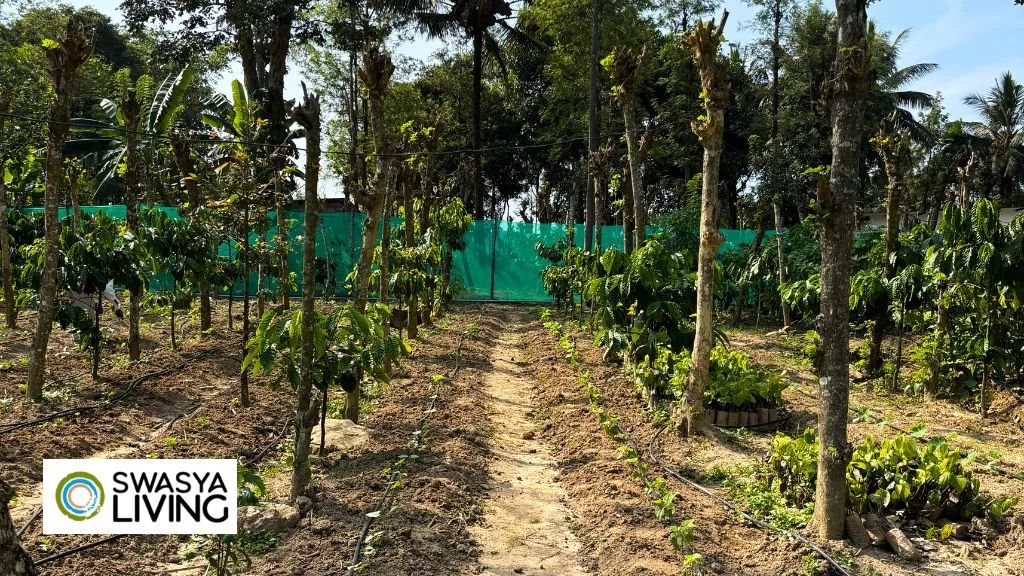
Many people assume that selling agricultural land in India is automatically tax-free.
That is one of the most common misunderstandings around capital gains on sale of agricultural land.
The important question is not simply whether you grow crops on the land. One of the first things to determine is whether the land qualifies as rural agricultural land under the Income-tax Act.
If it qualifies as rural agricultural land, it is generally excluded from the definition of a capital asset, so its sale does not attract capital gains tax. However, agricultural land that falls within the statutory definition of urban agricultural land can be treated as a capital asset, and the resulting gain may be taxable.
There are also separate rules covering:
Short-term and long-term capital gains
Section 54B exemption
Capital Gains Account Scheme
TDS on property purchases
Agricultural income versus capital gains
How the location of the land affects its tax treatment
So, before assuming that the sale of agricultural land is tax-free, it is important to understand how the land is classified.
Rural vs Urban Agricultural Land: Why the Difference Matters for Tax
This is the single most important rule. Tax on sale of agricultural land depends on where your plot is physically located, not what you grow on it.
If your land qualifies as rural agricultural land, it isn't even treated as a "capital asset" under income tax laws. So, zero capital gains tax applies when you sell. But if it falls under urban agricultural land, the tax authorities treat it like any normal property asset, and you will owe tax on your profits.
Here is how the government decides if your farm plot is rural or urban based on aerial distance from municipal limits:
Within 2 km: If municipal population is between 10,000 to 1 lakh.
Within 6 km: If municipal population is between 1 lakh to 10 lakhs.
Within 8 km: If municipal population exceeds 10 lakhs (which applies to almost all farm plots around Bengaluru, Mysuru, or major Indian hubs).
My Personal Note: Don't measure distance using your car's Google Maps driving route! The Tax Department measures distance aerially ("as the crow flies"). I learned this the hard way when a plot I thought was 12 km away by road turned out to be just 7 km aerially from the city limit.
Rural vs Urban Agricultural Land: Taxability at a Glance
Here is how sale of agricultural land taxability breaks down depending on location and buyer compliance:
Land Type | Is it a Capital Asset? | Tax Treatment on Sale | TDS Applicability (Sec 194-IA) |
Rural Agricultural Land | No | 100% Tax-Free | No TDS required |
Urban Agricultural Land (Held < 24 months) | Yes | Short-Term Capital Gain (taxed at your income slab) | 1% TDS if deal value > ₹50 Lakhs |
Urban Agricultural Land (Held > 24 months) | Yes | Long-Term Capital Gain (taxed at 20% with indexation benefits where applicable) | 1% TDS if deal value or stamp duty > ₹50 Lakhs |
TDS Rules When Buying Agricultural Land
Many buyers forget their compliance duties. Under Section 194-IA, when buying property worth ₹50 lakhs or more, the buyer must deduct 1% TDS and pay it to the government using Form 26QB.
However, if you are buying rural agricultural land, this 1% TDS rule does not apply. But be careful: if the land is classified as urban, and the agreement value or government guidance value (stamp duty rate) exceeds ₹50 lakhs, you must deduct that 1% TDS. Failing to do this can get you a penalty notice from the department.
How to Save Tax on Sale of Agricultural Land: Key Exemptions
If your plot falls into the taxable urban category, don't panic. You can legally claim an exemption on sale of agricultural land using tax saving provisions:
1. Section 54B (Reinvesting in Farm Land)
If you sell urban agricultural land, you can save 100% of your capital gains tax if you buy another agricultural land within 2 years. The condition? The original land must have been used for farming by you or your parents for at least 2 years before the sale.
2. Capital Gains Account Scheme (CGAS)
Couldn't find a new plot before filing your annual ITR? You can temporarily deposit your unutilized profits into a CGAS account with a public bank before your tax filing deadline to claim the exemption safely.
Agricultural Income vs Capital Gains: Common Tax Myths
Myth 1: "Agricultural income and capital gains are the same thing." Nope! Growing tomatoes and selling them gives you exempt agricultural income under Section 10(1). But selling the plot itself generates capital gains, which is taxed separately.
Myth 2: "I planted 10 coconut trees, so my land is now rural!" Tree planting doesn't change official municipal distance rules. The location classification remains fixed by law.
How to Reduce Tax on Sale of Agricultural Land Legally?
There is no single tax-saving strategy that applies to every agricultural land sale.
Depending on the transaction, taxpayers may need to examine:
Whether the land qualifies as rural agricultural land
Applicable capital gains classification
Section 54B
Section 10(37), where applicable
Capital Gains Account Scheme
Applicable deductions and transfer expenses
Grandfathering provisions for eligible property acquired before 23 July 2024
The important point is to plan before completing the sale, not after the transaction is already done.
A tax professional can help determine which provisions actually apply to your circumstances.
Final Takeaway
The biggest mistake you can make when selling agricultural land is assuming:
"It's agricultural land, so there is no tax."
The first question should be whether the land qualifies as rural agricultural land under the Income-tax Act.
If it does, its transfer is generally outside the capital-gains provisions because it is not treated as a capital asset.
If it does not, you may need to calculate capital gains and examine provisions such as Section 54B or, in specific cases, Section 10(37).
You should also check the applicable TDS requirements and keep complete records of the property's purchase, improvements and sale.
Most importantly, do not rely on an old tax rule or a property's road distance to determine your liability. Tax rules and property classifications can be technical, so verify the current provisions and obtain professional advice for a specific transaction
Faq's
Is capital gain on sale of agricultural land taxable in India?
It depends on whether the land is treated as a capital asset. Qualifying rural agricultural land is generally excluded from the definition of a capital asset, while qualifying urban agricultural land can be subject to capital gains tax.
Is rural agricultural land completely tax-free when sold?
A qualifying sale of rural agricultural land generally does not attract capital gains tax because such land is excluded from the definition of a capital asset. Other tax or transaction considerations may still apply depending on the circumstances.
What is the distance limit for rural agricultural land?
The Income-tax Act specifies aerial-distance limits based on the population of the relevant municipality or cantonment board: 2 km, 6 km or 8 km depending on the applicable population category.
Is agricultural land within 8 km of a city taxable?
Not automatically. The applicable distance depends on the population category of the relevant municipality or cantonment board. The test also uses aerial distance and the statutory conditions must be examined for the specific property.
What is Section 54B for agricultural land?
Section 54B provides capital-gains relief in qualifying cases where agricultural land used for agricultural purposes for the prescribed period is transferred and another agricultural land is purchased within the prescribed time, subject to the conditions of the section.
Can I claim Section 54B if I buy another agricultural land?
Potentially, if all the conditions under Section 54B are satisfied. The new agricultural land generally needs to be purchased within two years after the transfer of the original land.
Many people assume that selling agricultural land in India is automatically tax-free.
That is one of the most common misunderstandings around capital gains on sale of agricultural land.
The important question is not simply whether you grow crops on the land. One of the first things to determine is whether the land qualifies as rural agricultural land under the Income-tax Act.
If it qualifies as rural agricultural land, it is generally excluded from the definition of a capital asset, so its sale does not attract capital gains tax. However, agricultural land that falls within the statutory definition of urban agricultural land can be treated as a capital asset, and the resulting gain may be taxable.
There are also separate rules covering:
Short-term and long-term capital gains
Section 54B exemption
Capital Gains Account Scheme
TDS on property purchases
Agricultural income versus capital gains
How the location of the land affects its tax treatment
So, before assuming that the sale of agricultural land is tax-free, it is important to understand how the land is classified.
Rural vs Urban Agricultural Land: Why the Difference Matters for Tax
This is the single most important rule. Tax on sale of agricultural land depends on where your plot is physically located, not what you grow on it.
If your land qualifies as rural agricultural land, it isn't even treated as a "capital asset" under income tax laws. So, zero capital gains tax applies when you sell. But if it falls under urban agricultural land, the tax authorities treat it like any normal property asset, and you will owe tax on your profits.
Here is how the government decides if your farm plot is rural or urban based on aerial distance from municipal limits:
Within 2 km: If municipal population is between 10,000 to 1 lakh.
Within 6 km: If municipal population is between 1 lakh to 10 lakhs.
Within 8 km: If municipal population exceeds 10 lakhs (which applies to almost all farm plots around Bengaluru, Mysuru, or major Indian hubs).
My Personal Note: Don't measure distance using your car's Google Maps driving route! The Tax Department measures distance aerially ("as the crow flies"). I learned this the hard way when a plot I thought was 12 km away by road turned out to be just 7 km aerially from the city limit.
Rural vs Urban Agricultural Land: Taxability at a Glance
Here is how sale of agricultural land taxability breaks down depending on location and buyer compliance:
Land Type | Is it a Capital Asset? | Tax Treatment on Sale | TDS Applicability (Sec 194-IA) |
Rural Agricultural Land | No | 100% Tax-Free | No TDS required |
Urban Agricultural Land (Held < 24 months) | Yes | Short-Term Capital Gain (taxed at your income slab) | 1% TDS if deal value > ₹50 Lakhs |
Urban Agricultural Land (Held > 24 months) | Yes | Long-Term Capital Gain (taxed at 20% with indexation benefits where applicable) | 1% TDS if deal value or stamp duty > ₹50 Lakhs |
TDS Rules When Buying Agricultural Land
Many buyers forget their compliance duties. Under Section 194-IA, when buying property worth ₹50 lakhs or more, the buyer must deduct 1% TDS and pay it to the government using Form 26QB.
However, if you are buying rural agricultural land, this 1% TDS rule does not apply. But be careful: if the land is classified as urban, and the agreement value or government guidance value (stamp duty rate) exceeds ₹50 lakhs, you must deduct that 1% TDS. Failing to do this can get you a penalty notice from the department.
How to Save Tax on Sale of Agricultural Land: Key Exemptions
If your plot falls into the taxable urban category, don't panic. You can legally claim an exemption on sale of agricultural land using tax saving provisions:
1. Section 54B (Reinvesting in Farm Land)
If you sell urban agricultural land, you can save 100% of your capital gains tax if you buy another agricultural land within 2 years. The condition? The original land must have been used for farming by you or your parents for at least 2 years before the sale.
2. Capital Gains Account Scheme (CGAS)
Couldn't find a new plot before filing your annual ITR? You can temporarily deposit your unutilized profits into a CGAS account with a public bank before your tax filing deadline to claim the exemption safely.
Agricultural Income vs Capital Gains: Common Tax Myths
Myth 1: "Agricultural income and capital gains are the same thing." Nope! Growing tomatoes and selling them gives you exempt agricultural income under Section 10(1). But selling the plot itself generates capital gains, which is taxed separately.
Myth 2: "I planted 10 coconut trees, so my land is now rural!" Tree planting doesn't change official municipal distance rules. The location classification remains fixed by law.
How to Reduce Tax on Sale of Agricultural Land Legally?
There is no single tax-saving strategy that applies to every agricultural land sale.
Depending on the transaction, taxpayers may need to examine:
Whether the land qualifies as rural agricultural land
Applicable capital gains classification
Section 54B
Section 10(37), where applicable
Capital Gains Account Scheme
Applicable deductions and transfer expenses
Grandfathering provisions for eligible property acquired before 23 July 2024
The important point is to plan before completing the sale, not after the transaction is already done.
A tax professional can help determine which provisions actually apply to your circumstances.
Final Takeaway
The biggest mistake you can make when selling agricultural land is assuming:
"It's agricultural land, so there is no tax."
The first question should be whether the land qualifies as rural agricultural land under the Income-tax Act.
If it does, its transfer is generally outside the capital-gains provisions because it is not treated as a capital asset.
If it does not, you may need to calculate capital gains and examine provisions such as Section 54B or, in specific cases, Section 10(37).
You should also check the applicable TDS requirements and keep complete records of the property's purchase, improvements and sale.
Most importantly, do not rely on an old tax rule or a property's road distance to determine your liability. Tax rules and property classifications can be technical, so verify the current provisions and obtain professional advice for a specific transaction
Faq's
Is capital gain on sale of agricultural land taxable in India?
It depends on whether the land is treated as a capital asset. Qualifying rural agricultural land is generally excluded from the definition of a capital asset, while qualifying urban agricultural land can be subject to capital gains tax.
Is rural agricultural land completely tax-free when sold?
A qualifying sale of rural agricultural land generally does not attract capital gains tax because such land is excluded from the definition of a capital asset. Other tax or transaction considerations may still apply depending on the circumstances.
What is the distance limit for rural agricultural land?
The Income-tax Act specifies aerial-distance limits based on the population of the relevant municipality or cantonment board: 2 km, 6 km or 8 km depending on the applicable population category.
Is agricultural land within 8 km of a city taxable?
Not automatically. The applicable distance depends on the population category of the relevant municipality or cantonment board. The test also uses aerial distance and the statutory conditions must be examined for the specific property.
What is Section 54B for agricultural land?
Section 54B provides capital-gains relief in qualifying cases where agricultural land used for agricultural purposes for the prescribed period is transferred and another agricultural land is purchased within the prescribed time, subject to the conditions of the section.
Can I claim Section 54B if I buy another agricultural land?
Potentially, if all the conditions under Section 54B are satisfied. The new agricultural land generally needs to be purchased within two years after the transfer of the original land.
Akshata
You Might Also Like




Subscribe to the Swasya
newsletter
Discover insights about sustainable farming, investment opportunities, and the future of agriculture.
By subscribing, you agree to the Privacy Policy
Subscribe to the Swasya
newsletter
Discover insights about sustainable farming, investment opportunities, and the future of agriculture.
By subscribing, you agree to the Privacy Policy